How to make a solo podcast feel like a conversation
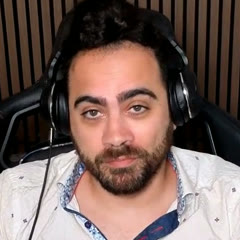 by Danny Abdeljabbar, founder of maneku
The short answer
A solo podcast feels like a monologue when there's nothing to react to. The fix is to build things to respond to into the episode: write questions instead of a script, talk to one specific listener, bring in listener messages and quotes to argue with, and use segments with hard edges. If you want a literal second voice, an AI co-host can join your recording and speak only when you summon it.
I've hosted a podcast with my friend Henry for about a decade, so solo episodes don't come naturally to me. Henry and I are both busier than we used to be, though, and sometimes I want to record when he can't. So I've been thinking a lot about what makes a solo episode work.
I also spend time on r/podcasting, and one post shows up over and over. Someone wants to start a show but doesn't want to do it alone. They say it feels like talking into the void. Sometimes they don't know anyone who'd co-host, sometimes their topic is so niche that only they care about it, and sometimes they just feel awkward talking alone for an hour. All of those are real.
Here's what I think actually helps.
Why solo episodes go flat
A two-host show has a built-in engine. One person says something, the other reacts, and the reaction creates the next thing to say. Alone, you lose that engine. Every sentence has to come from you, and nothing pushes back. That's why solo episodes drift into lectures, and why the host starts to sound tired around minute twenty.
So the goal isn't to talk better. It's to build things into the episode that you can react to.
1. Write questions, not a script
A script makes you sound like you're reading, because you are. Instead, write down the questions a smart listener would ask about your topic, in the order they'd ask them. Then answer them out loud. Answering a question sounds like conversation even when nobody asked it.
2. Talk to one specific person
Don't picture your audience. Picture one real person who'd enjoy this episode, and talk to them. You'll explain things at the right level, skip what they already know, and naturally say things like "you're probably thinking..." which is exactly what makes a solo show feel two-sided.
3. Bring other voices in
Listener messages, comments, voice notes and emails are the easiest way to get a second perspective into a solo episode. Read one out and respond to it. Even a critical comment is great material, because disagreeing with someone is the most natural conversation there is.
4. Argue with a source
Read a short quote from an article, a book or a public figure, then respond to it. Agree, disagree, complicate it. You're no longer generating everything from scratch. You're having a conversation with something that exists, and your listener gets to hear you think.
5. Use segments with hard edges
A solo hour with no structure is hard to listen to and harder to record. Break it into named segments with a clear start and end: a story, a listener question, a quick take on the news, a recommendation. Each new segment resets your energy and gives the listener a place to re-engage.
6. Record a little shorter than feels right
Most solo episodes are too long because there's no one to say "we should wrap up." Decide your segments in advance and stop when they're done. You can always do a part two.
7. Add a second voice you control
This is the one I built a product around, so take it with that in mind. The engine a solo show is missing is a reaction. An AI co-host can supply one.
maneku joins your Descript, Riverside or Restream recording as a participant with its own tile, name and voice. It listens to everything you say. It stays completely silent until you summon it with a button or a hotkey. When you do, you choose how it responds: a quick reaction, a researched answer with sources, or a longer take that carries a segment for a while. You get something to push against, on your schedule, and it never interrupts.
A few things I'd suggest if you try it:
- Give it a character that fits your show. You can choose its voice and personality. A dry expert suits a history show, and a chaotic sidekick suits a comedy one.
- Summon it for reactions, not filler. It's best when you hand it something specific: "tell me why I'm wrong," "what's the strongest counterpoint," "fact check that number."
- Tell your listeners what it is. I wrote about how I handle disclosure. The short version is to be clear about it once and never let it pass as human.
- Know the cost model. The beta runs on your own AI provider keys, and you pay those providers for what you use. Solo hosts tend to summon more often than a two-person show, so expect to use more.
None of this replaces having a good idea and preparing for it. A second voice makes a solo show feel like a conversation. It can't give you something to say.
Questions people ask
How long should a solo podcast episode be?
As long as you can stay interesting, which for most people is shorter than they think. A tight 20 minute solo episode usually beats a loose hour. Let the structure decide the length, not a target number.
Is it weird to have an AI co-host on a solo show?
It's new, so some listeners will find it odd and some will love it. What matters most is being upfront about it. Introduce it clearly, keep it in your show notes, and never let it pass as a human.
Should I script a solo podcast?
Script the opening and the transitions if it helps, but not the middle. Bullet points and questions keep you sounding like you're talking to someone rather than reading at them.
How do I stop feeling like I'm talking to myself?
Give yourself someone to talk to. Picture one real listener, read their messages on air, or add a second voice. An AI co-host is one option, and it only speaks when you ask, so you stay in charge of the episode.
Danny Abdeljabbar
I built maneku. I also make all the artwork and marketing for Dry Quest, an app I developed with my wife, and I'm usually building a smaller app or two on the side. I co-host the Bro History podcast, and by day I work in revenue operations. Before all of this, I was an artist across a lot of mediums, including music and audio.
Want a co-host in your next recording?
maneku is in open beta on macOS. It joins Descript, Riverside and Restream as a real participant.
Get early access